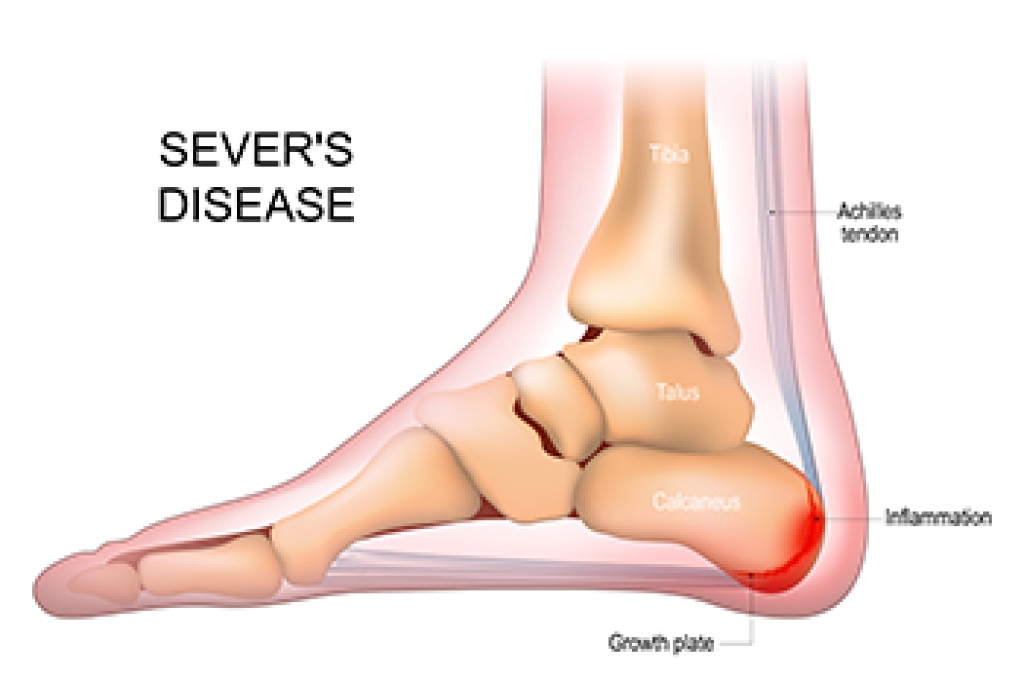
Sever’s disease is a common cause of heel pain in growing children, especially those who participate in sports. Also called calcaneal apophysitis, it occurs when the growth area at the back of the heel becomes irritated. During growth spurts, bones may grow faster than muscles and tendons can adjust, increasing tension around the heel. Repeated running and jumping add pressure to this sensitive area. Although the name sounds serious, Sever’s disease is not an infection or a permanent bone injury. With appropriate care, most children recover and return to their usual activities.
Sever’s disease most often affects children between eight and 14 years old, while their heel bones are still developing. It is particularly common in children who play soccer, basketball, or other sports involving frequent running and jumping. Symptoms usually include pain at the back or bottom of the heel, tenderness when the area is pressed, and discomfort during activity. Some children begin limping or walking on their toes to avoid pressure. Pain may decrease with rest and return when sports resume. Risk factors include sudden increases in training, tight calf muscles, and wearing shoes with limited support.
The main cause is repeated stress on the growth plate where the Achilles tendon attaches near the heel. Growth spurts can make this area more vulnerable because the tendon may pull firmly on developing tissue. Hard playing surfaces and high-impact sports may increase irritation, especially when children have little recovery time between activities. Sever’s disease affects one heel or both, and symptoms may become more noticeable during busy sports seasons. Parents should not assume every episode of childhood heel pain comes from this condition. A podiatrist examines the heel, reviews activity levels, and recommends imaging if another injury is suspected.
A podiatrist can help confirm the diagnosis and create a treatment plan based on the child’s symptoms. Care may include temporarily reducing painful activities, and wearing supportive shoes or heel cups. Gentle calf stretching may be recommended when appropriate, while a short period of time away from high-impact sports can allow irritation to settle. The podiatrist monitors recovery and advises when activity gradually resumes. Persistent pain or difficulty bearing weight needs prompt assessment. If your active child has heel pain, it is suggested that you consult a podiatrist who can accurately diagnose and treat Sever’s disease.
Sever's disease often occurs in children and teens. If your child is experiencing foot or ankle pain, see one of our podiatrists from North Florida Foot & Ankle Center. our doctors can treat your child’s foot and ankle needs.
Sever’s Disease
Sever’s disease is also known as calcaneal apophysitis, which is a medical condition that causes heel pain I none or both feet. The disease is known to affect children between the ages of 8 and 14.
Sever’s disease occurs when part of the child’s heel known as the growth plate (calcaneal epiphysis) is attached to the Achilles tendon. This area can suffer injury when the muscles and tendons of the growing foot do not keep pace with bone growth. Therefore, the constant pain which one experiences at the back of the heel will make the child unable to put any weight on the heel. The child is then forced to walk on their toes.
Symptoms
Acute pain – Pain associated with Sever’s disease is usually felt in the heel when the child engages in physical activity such as walking, jumping and or running.
Highly active – Children who are very active are among the most susceptible in experiencing Sever’s disease, because of the stress and tension placed on their feet.
If you have any questions, please feel free to contact our office located in Ponte Vedra, FL . We offer the newest diagnostic and treatment technologies for all your foot care needs.


